Most wellington boots are built for a five-minute trudge to the shed, a quick dog leg across wet grass, or standing about at a festival. A two-hour walk is a different job entirely. Suddenly the things that never mattered — a flat foam insole, a stiff calf-hugging shaft, a sole with the grip of a buttered plate — become the only things you can think about from about the forty-minute mark onwards.
The good news is that the differences between boots that cope and boots that don't come down to four measurable features: tread, footbed, shaft flexibility and weight. Here's what each one actually does for you, and how to weigh them up before you spend money.
Where wellies go wrong on a longer walk
Short walks hide problems. Heat and friction don't have time to build up, tired calves don't get a chance to complain, and a thin sole feels fine on soft ground. Stretch that to two hours on mixed terrain — a farm track, a muddy field edge, a stretch of tarmac lane, a stile or two — and the boot's weaknesses surface in a predictable order. Heels rub first. Then arches ache. Then the balls of your feet feel every stone, and finally your legs feel heavier than they should for the distance covered.
None of that is about brand or price. It's about construction.
Sole tread: grip is a pattern and compound problem
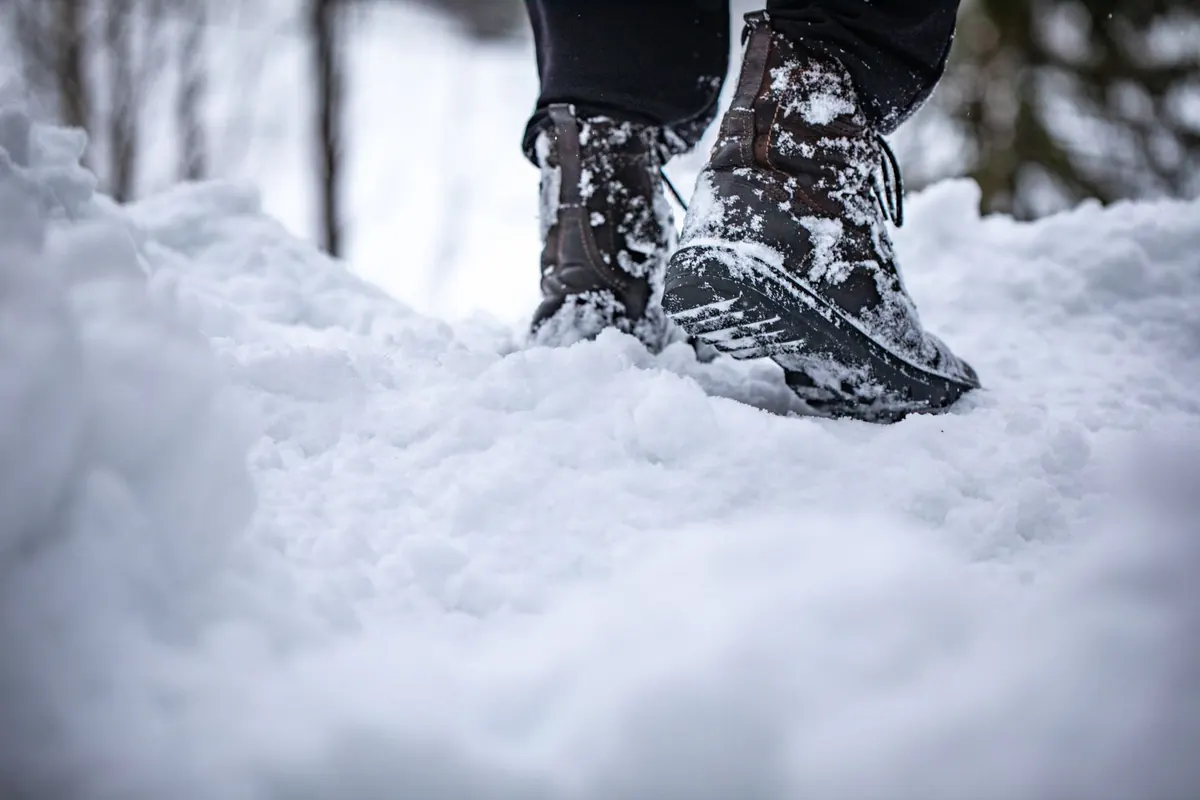
Tread matters most in the conditions you'll actually meet, and those conditions change constantly on a long walk. Thick, deep lugs are excellent in mud and soft grass; the same lugs on wet tarmac or smooth rock feel vague and wear down fast. So look for balance rather than maximum aggression.
What to check:
- Lug depth and spacing. Deep, widely spaced lugs shed mud as you walk. Shallow, tightly packed patterns clog into a slick pancake within a few steps of a wet field.
- A heel brake. A defined block or step at the back of the sole gives you control on descents and wet slopes, which is where most slips happen.
- Rubber that stays soft in the cold. Cheap compounds harden in low temperatures and lose grip exactly when you need it. Good rubber flexes rather than skates.
- Wear at the heel and ball. Check your old boots. If the heel edge is rounded off, your new pair will go the same way unless the compound is better.
If your walking is mostly towpaths, lanes and firm tracks, a moderately lugged sole with a smooth central zone will roll more comfortably than a deep tractor-style tread.
Cushioning and footbed support: fix this first
This is where most wellies cheap out, and where most long-walk discomfort starts. A flat slab of foam under your foot will compress within a few miles and leave you standing on a thin rubber sheet.
Look for three things. First, a removable insole. That single feature lets you swap in a supportive footbed of your own, which is often the cheapest upgrade you can make to any pair of boots. Second, an arch shape with a heel cup — something that holds your foot rather than letting it slide. Third, a shank or stiffening layer under the midfoot. You can test this in the shop: hold the boot by the heel and press the sole under the arch with your thumb. If it flexes like a slipper, it will fold under your foot on uneven ground.
A footbed you can replace is worth more than a footbed that's merely soft. Softness fades; support doesn't need to.
If you already use orthotic insoles or have ongoing foot pain, take advice from a podiatrist or pharmacist about what suits your feet — wellington boots are not a neutral shoe, and adding your own insole can change the fit enough to need a size up.
Shaft flexibility and height
The shaft is the part above your ankle, and it's the most overlooked comfort factor. A stiff, tall shaft grips the calf with every step, rubs behind the knee and restricts your stride — you end up walking like you're wearing ski boots. A shaft that's too floppy won't stay up and lets water in over the top.
The practical answer is adjustability. A side gusset, a buckle strap or a drawcord at the top lets you set the opening to your leg on the day. Knee-high boots give the best protection on wet ground; mid-calf designs suit shorter walks and warmer weather but will wet out faster in long grass. Neoprene-lined shafts flex more easily and feel warmer, though they hold heat on summer walks.
Weight: the detail nobody checks
Weight is cumulative. A pair that feels fine when you pick it up in a shop can feel like ankle weights by hour two, especially because wellies don't have laces to lock your foot in — your legs do more of the work of keeping them on.
Lighter isn't automatically better. Very light boots often save weight in the sole and insole, which is exactly where you want substance. The sweet spot is a boot that feels light in the hand but firm underfoot when you press the sole. If you can, weigh a pair against your current boots and compare like for like; a difference you can feel in the shop is a difference you'll feel on the walk.
What to prioritise, in order
- Fit. Room at the toe, no lift at the heel, tried on with the socks you'll actually wear. Everything else is wasted if this is wrong.
- A supportive, replaceable footbed. This is the single biggest comfort upgrade available.
- Tread matched to your terrain. Deep lugs for mud and grass, moderate patterns for lanes and tracks.
- An adjustable or flexible shaft. Freedom to swing your leg naturally.
- Reasonable weight. Light enough to keep going, but with a sole that doesn't fold.
Style and colour come last. They're not unimportant, but they won't carry you home.
Practical habits that make long walks easier
Buy boots in the afternoon when your feet are at their largest, and take the socks you plan to walk in. Spend twenty minutes walking on hard floor before you commit. Once you're home, wear them around the garden and on a couple of short trips before attempting a long one — even the best boot needs a few miles to settle around your heel and instep.
On the walk itself: carry a spare pair of socks, loosen the top of the shaft if your calves start to burn, and dry boots properly afterwards by stuffing them with newspaper and keeping them away from radiators, which hardens rubber. Check the heel and ball of the sole every season; once the tread there is gone, grip and cushioning go with it.
Choose the boot for the walk you'll realistically do most often, not the one on the shelf with the most aggressive sole. Two hours of comfort comes from fit, support and a tread that suits the ground — everything else is detail.
Photo: Yan Krukau / Pexels